Aangan Intelligence
What one small radar sensor understands today, the intelligence we are building on top of it to learn each person's routines, and where the hardware is going.
Everything it understands
What a single sensor in each room picks up, grouped into four areas. The data below is illustrative.
- PPapaLiving room · Sitting
- RRohanKitchen · On a call
- IIshaCourtyard · Walking
- MMaBedroom · Asleep
- How many people are in each room
- Who is who, without seeing faces
- Where each person is, room to room
- Visitors arriving and leaving
In plain words, Aangan tells you
How the night went: sleep, and breathing and heart-rate trends
In pilot. Each capability is being validated with our first partners.
Sleep, night by night
Every night Aangan estimates sleep stages from breathing and movement, with no band on the wrist. Pick a night from Ma's week.
- Time asleep
- 5h 38m
- In bed
- 23:12 to 06:00 · 83% efficiency
- Deep · REM
- 1h 31m · 1h 08m
- Woke up
- 6 times, 3 for the bathroom
Illustrative week. Sleep stages from radar are estimates, not a clinical sleep study.
Then, the patterns that matter
The intelligence sits in the background, learns what normal looks like for this one person, and speaks up only when something has genuinely moved. On a normal day, that is one morning brief and nothing else. In development.
Eight weeks with Papa · trips a night
Night-time bathroom trips
How often, and for how long. A steady rise can be an early sign of an infection or a blood-sugar problem.
Up from about one and a half to three a night in two weeks. Rohan gets a note: worth mentioning to his doctor.
Underneath, it is RAEH's existing biosignal stack, pointed at a new sensor
Signal engine
Clutter removal, person separation, signal quality
Personal baselines
Each resident's own normal, by hour, night and week
Change detection
Drift, fall-risk score, early-decline signals
Actions
Staff alert, family brief, weekly summary
Illustrative data. The intelligence layer is in development; the bed-pad sensor is an optional accessory, because radar cannot sense moisture.
What it can point toward, without claiming to diagnose
The pattern Aangan surfaces
Resting breathing rate drifting above this person's own range
Evidence
Strong
Where that comes from
In 89 COPD patients, breathing rate rose over the five days before hospitalisation
We say
“Her breathing at rest has been above her usual range for three nights. You may want to look in.”
We never say
“Pneumonia detected.” “UTI likely.” “Fall risk: high.” Any of those is a diagnosis, and a diagnosis is a regulated medical device.
Form factors
Same intelligence, different rooms.
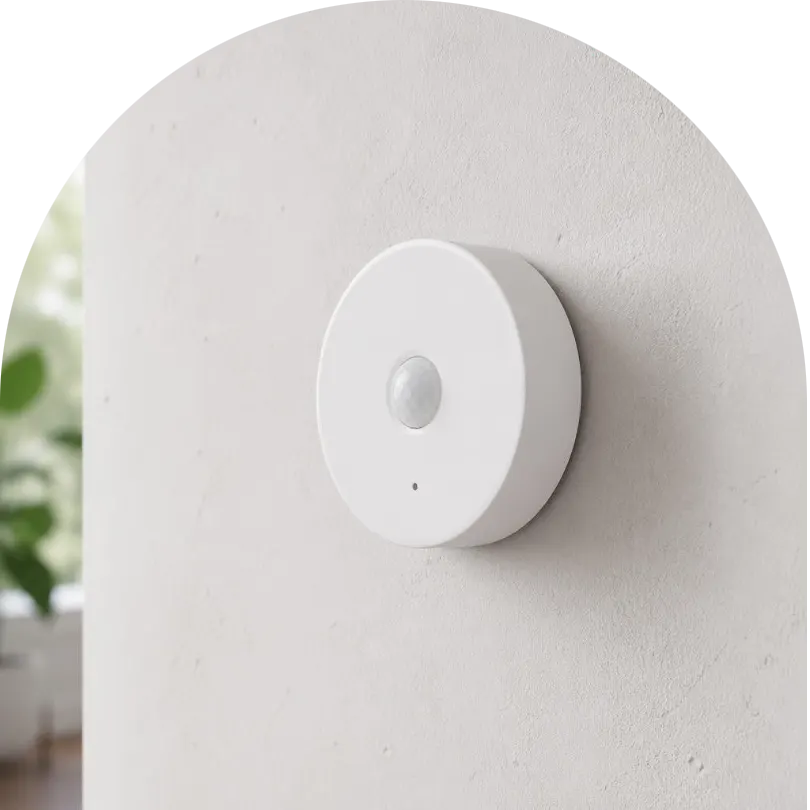
Wall sensor
Bedroom and living room, mounted at head height.
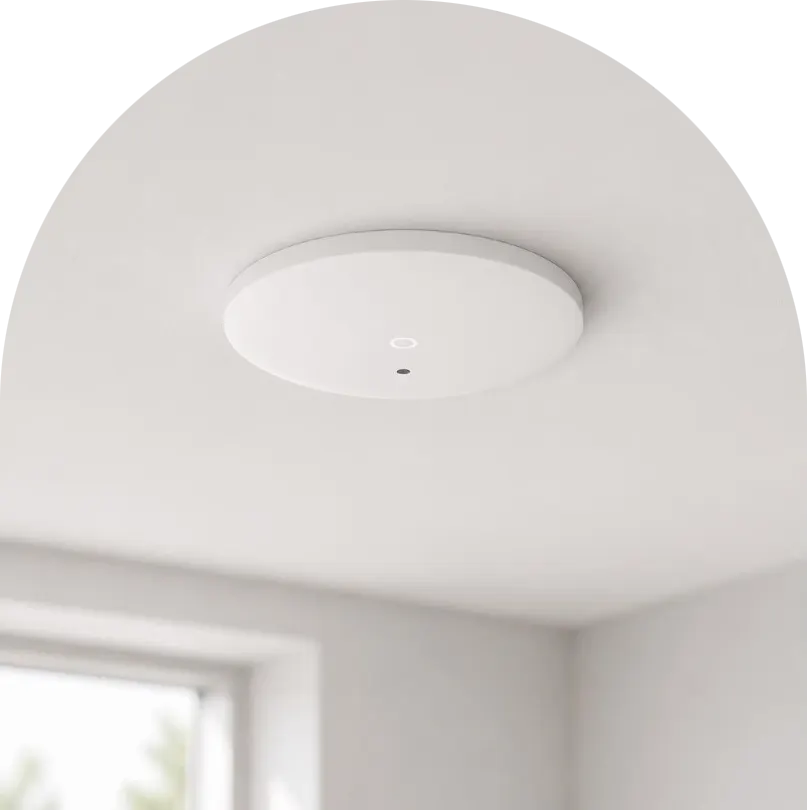
Ceiling sensor
Whole-room coverage, including the bathroom.
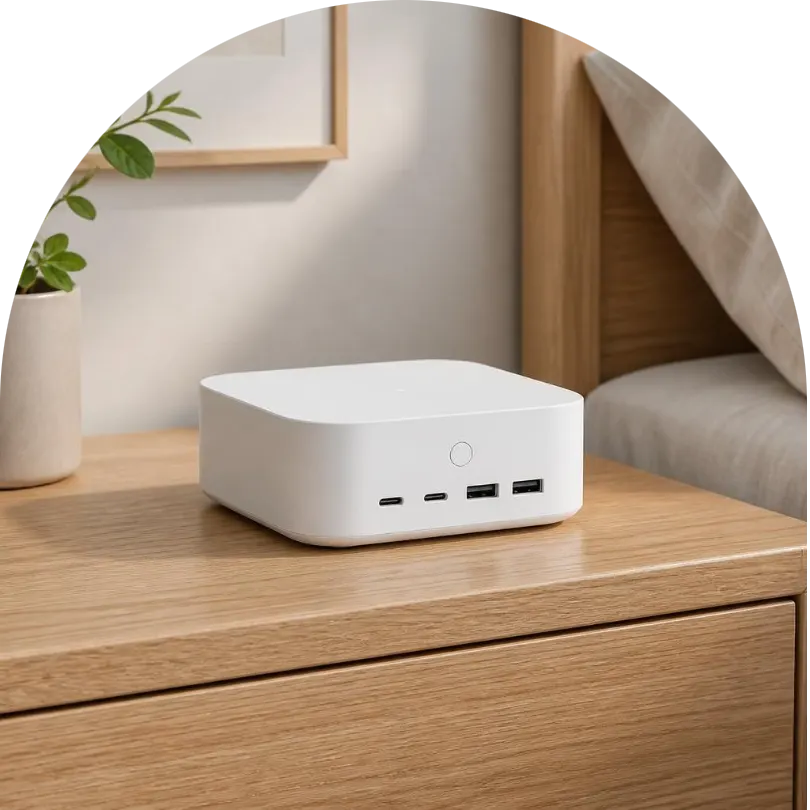
Bedside hub
Next to the bed, for sleep, breathing and heart rate.
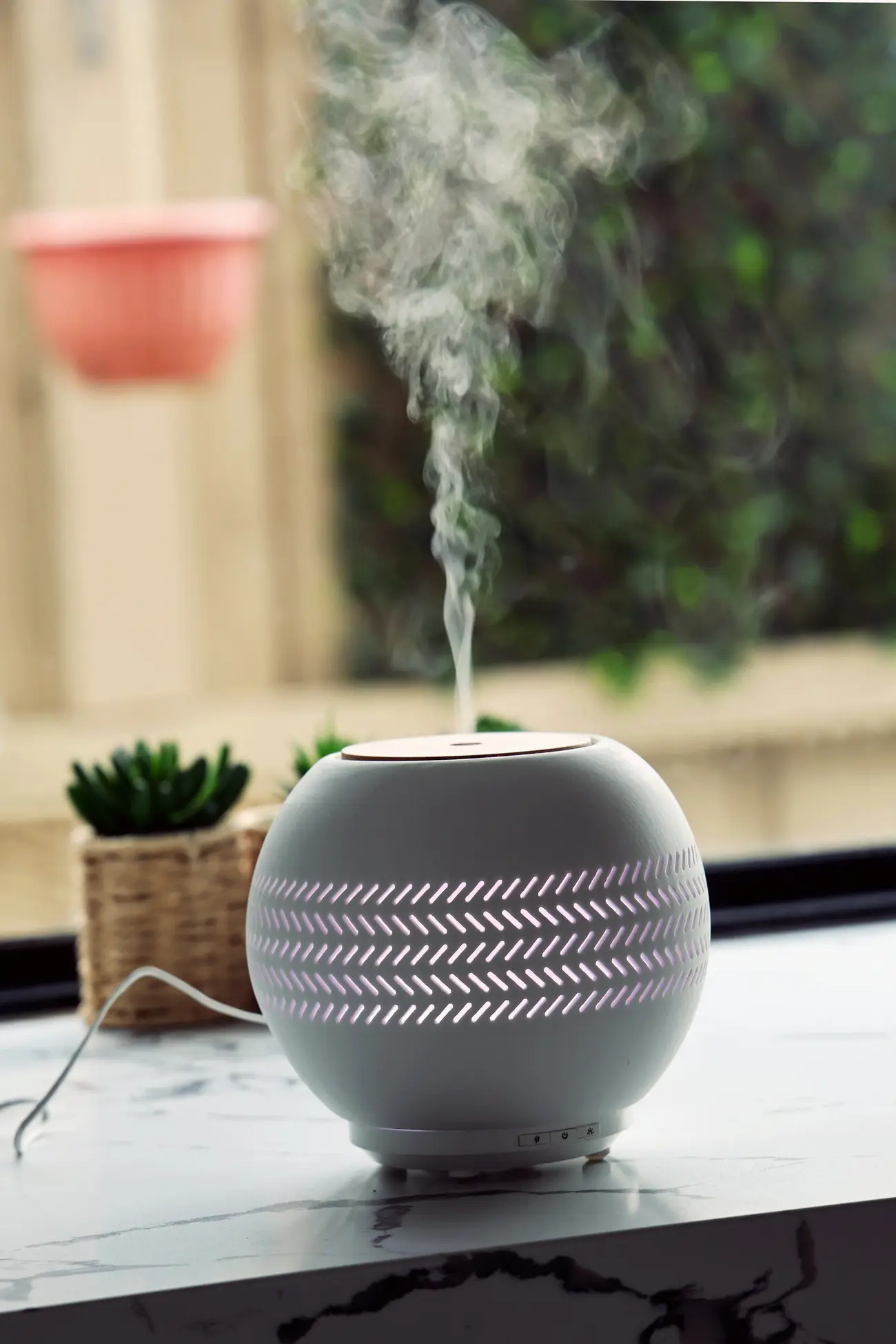 Concept
Diffuser
Sensing hidden in an everyday object.
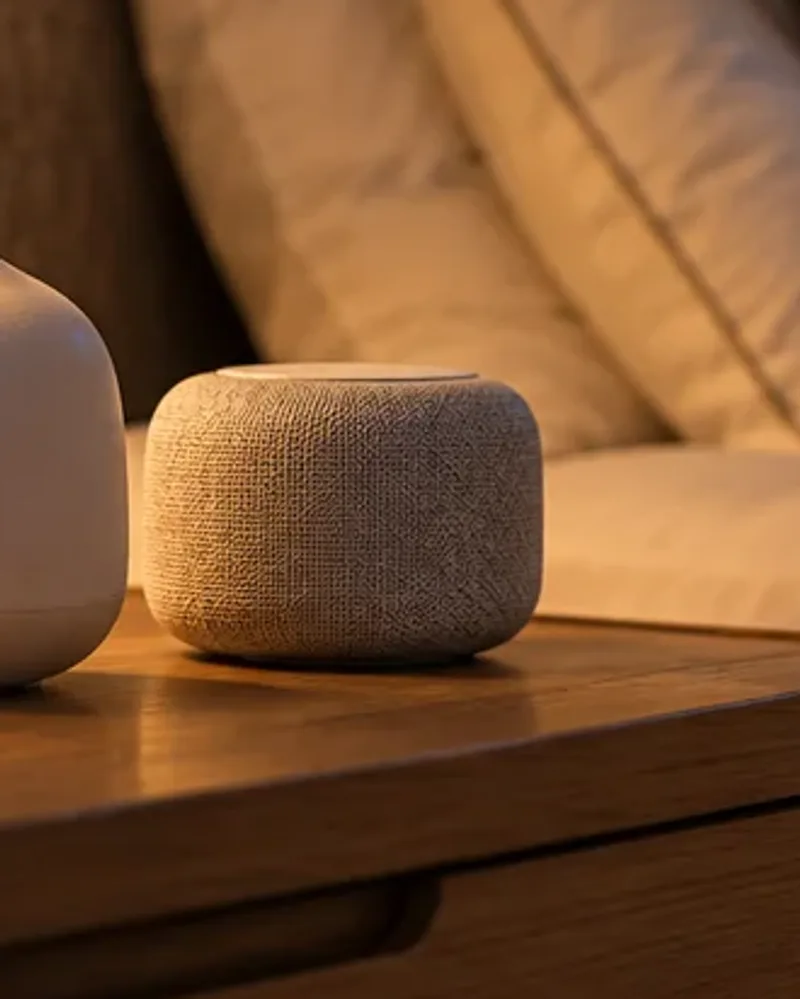 Concept
Speaker
Sensing plus a voice channel.
Device decisions, not yet final
Working assumptions, to be settled once we have the module in hand and an operator has walked a real apartment with us.
01Wall mounted, chest height
One unit per zone, on the wall. No ceiling work, no electrician and no drilling into a slab. Mounting height matters more than anyone expects, so installation will be a short guided routine.
0260 GHz mmWave module
Off the shelf, with reference firmware. No camera, no microphone; it works in the dark and through bedding. A ceiling mount is the alternative where fall coverage needs a wider cone.
03A thin USB-C cable to a socket
It plugs into an ordinary socket, so anyone can install it in minutes.
Next, diffusers and speakers that sense how they feel
We are building Aangan's sensors into electronic diffusers and speakers, so the devices themselves become intelligent. When stress rises, or heart rate and breathing move away from someone's normal, the room responds with a blend of fragrances and calming sound.
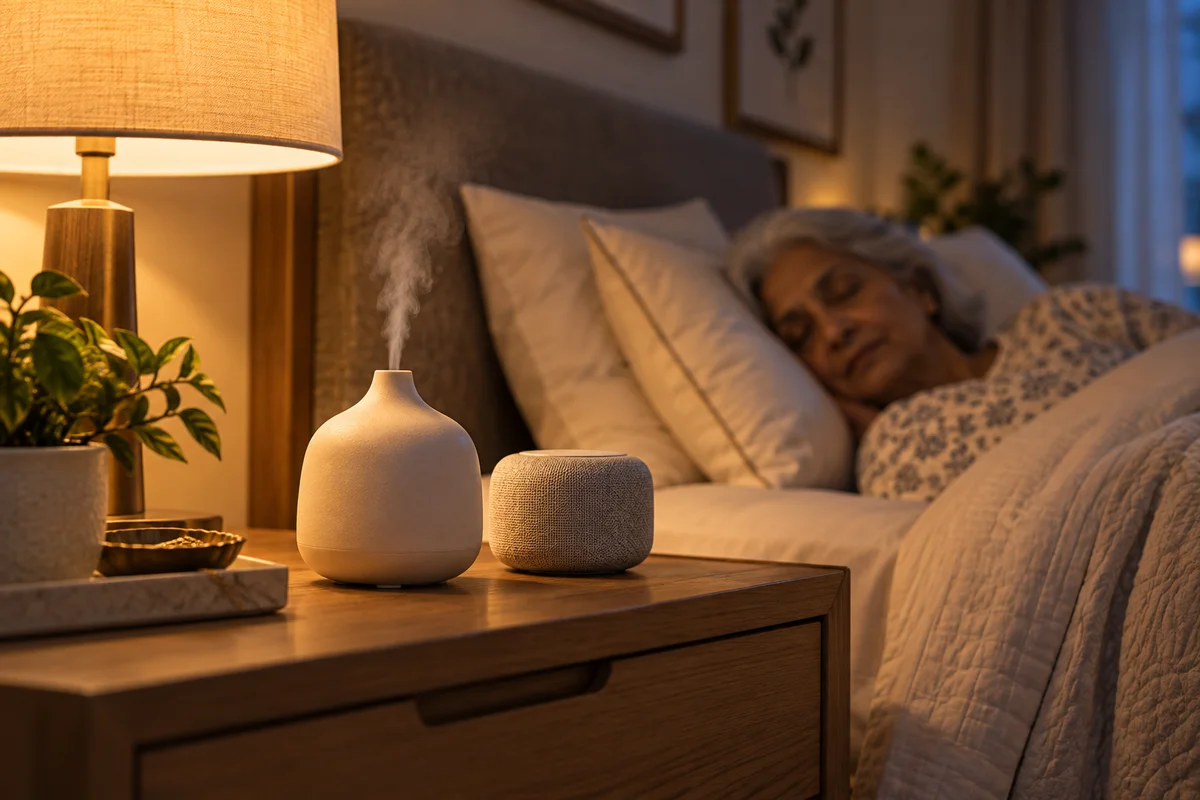
Ma, 02:14
64bpm
Above her usual
Senses
Her heart rate and breathing climb above her usual, and stay there.
Diffuses
The diffuser releases a blend chosen for her.
Lavender 50% · Bergamot 30% · Sandalwood 20%
Plays
The speaker fades in sound she finds calming.
Now playing: Soft rain, with a low tanpura drone
Settles
Back within her usual. It stops, and remembers what helped.
Lavender with soft rain settled Ma fastest. Next time, it starts there.
On our roadmap. This is an example scenario. The aim is comfort and wellbeing, and it is not a medical treatment.
- For your parents: their privacy, and their independence
- For you: knowing they are fine without having to check
- For caregivers: attention where it is needed
- For care homes: one view of every room at night
Be one of the first homes
Aangan is in pilot. We are looking for senior-living operators to pilot with, and partners to build with. Leave your details and we will be in touch.