Why Aangan
Who needs Aangan, why round-the-clock care is out of reach for most families, and where today's options fall short.
aangan nounThe courtyard at the centre of an Indian home. The open square the rooms look onto, where the family gathers and where the elders sit. It watches over everyone without anyone noticing it.
A rapidly ageing world. A growing care gap
- 1 in 6
- people globally will be 60+ by 2030
- 37M
- falls each year are severe enough to need medical attention
- 684K
- people die from falls every year
WHO
Yet most care still happens in snapshots: a morning visit, a phone call, a caregiver check.
Morning visit, Phone call, Caregiver check. Everything in between goes unseen.
What happens between those moments goes unseen.
The ageing curve is not a forecast, it is arithmetic
- ~5.9M
- Indians cross into the 60+ bracket every year
- 11.1M
- health worker shortfall worldwide by 2030 (WHO)
- 99%
- of US nursing homes have open positions they cannot fill
Demand is rising on a demographic curve. The people to meet it are not.
India, where the children moved away
- 149M
- Indians aged 60+ in 2022, 10.5% of the population
- UNFPA 2023
- 347M
- projected by 2050, one person in five
- UNFPA 2023
- ~6%
- of the 60+ live entirely alone; a fifth live alone or with only a spouse
- LASI, NITI Aayog
- 35.4M
- overseas Indians as of March 2025, the largest diaspora in the world
- MEA, Lok Sabha
The supply side is almost empty
- 22,157
- organised senior-living units in the whole of India, June 2025
- 1.3–1.4%
- market penetration, against more than 6% in the US and Australia
- <500
- of India's districts have an old-age home at all
A fifth live alone or with only a spouse, the diaspora paying for their care is the largest on earth, and organised care reaches barely 1% of them.
Care cannot be everywhere, and few can afford it round the clock
Cannot get one
24/7 for one person is 168 hours a week. One caregiver covers about 40, so around 4 full-time caregivers per person.
Cannot afford it
4+ salaries for one person is out of reach for most families and many operators.
4full-time caregivers
160 of 168 hours a week
Today, elder care is reactive
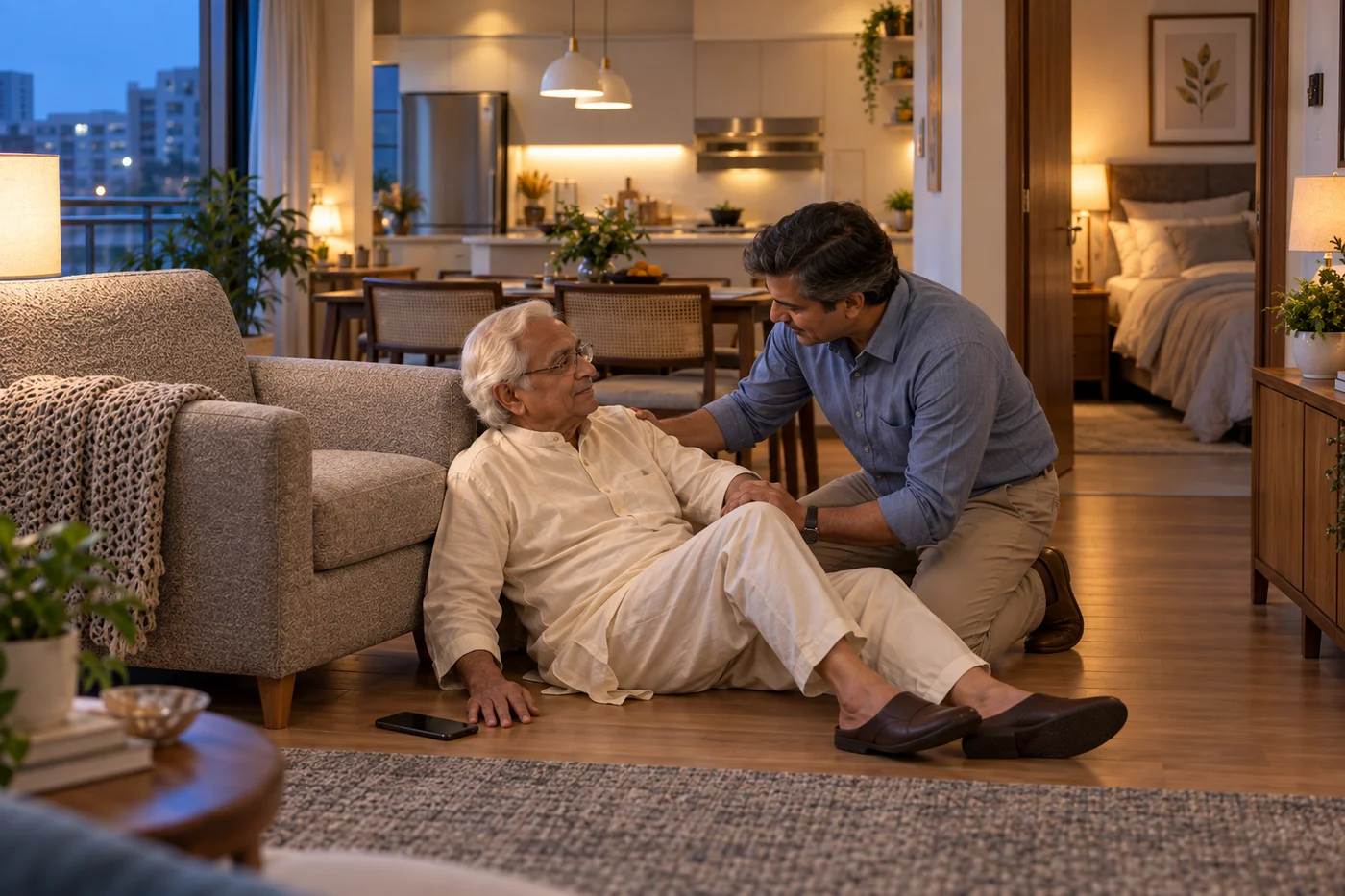
Wearables
A band only helps while it is worn. It comes off to shower and to charge, and most older people take it off at night, which is exactly when the useful signal is there.
Cameras
Families refuse them and operators will not install them in bathrooms and bedrooms, the two rooms where most serious falls happen.
Human caregivers
Staffing is thinnest between midnight and six, and family are asleep. Bed exits and wandering go unrecorded until morning.
Basic fall sensors
A pendant only works if it is worn and pressed. In one study of people over ninety, 30% of those who fell lay on the floor for more than an hour.
What’s missing
Continuous, effortless health monitoring.
Every option today either asks something of the older adult, or only reacts once something has already gone wrong. The one that asks nothing of them is the one that gets used.
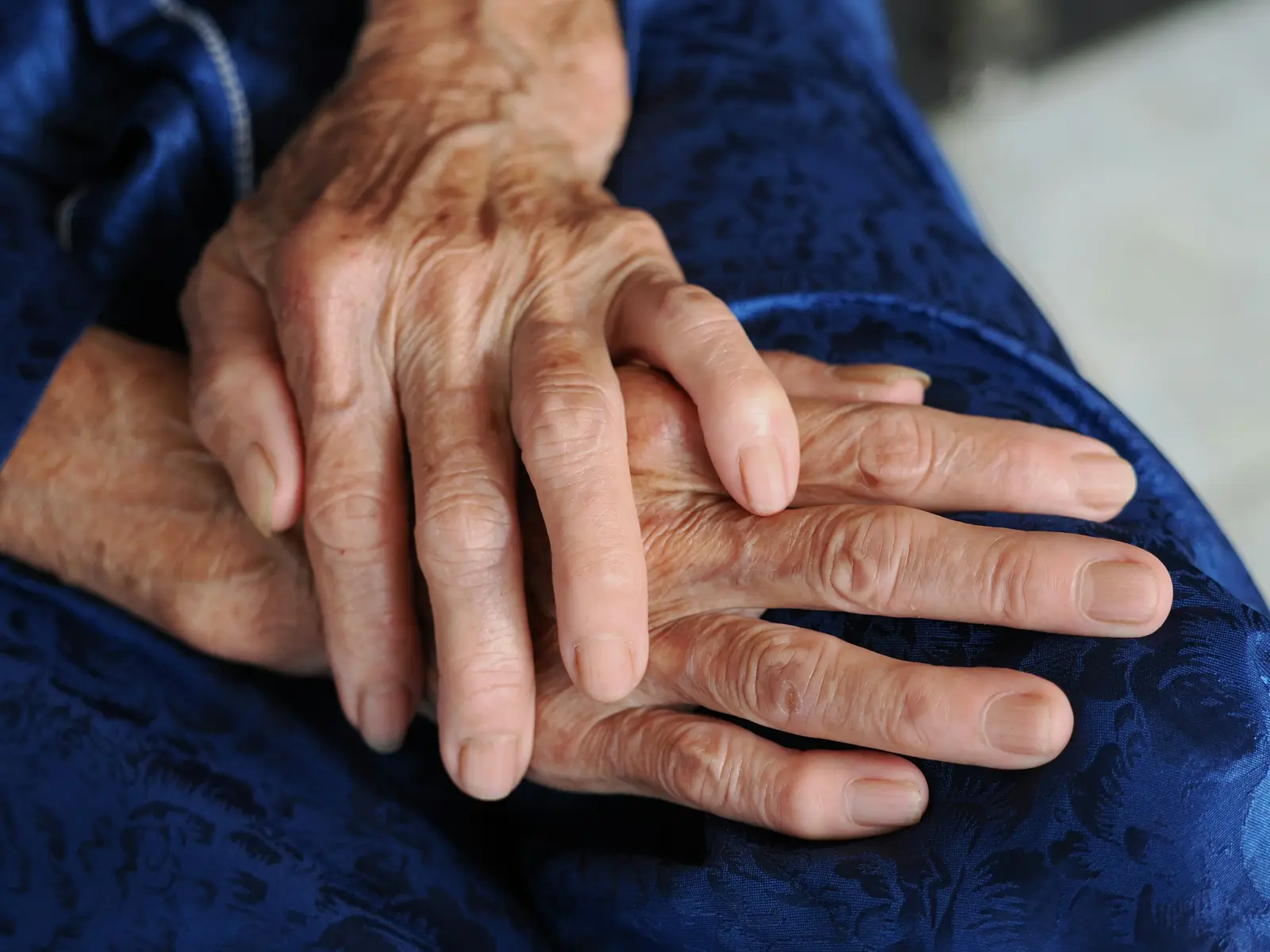
- For your parents: their privacy, and their independence
- For you: knowing they are fine without having to check
- For caregivers: attention where it is needed
- For care homes: one view of every room at night
Be one of the first homes
Aangan is in pilot. We are looking for senior-living operators to pilot with, and partners to build with. Leave your details and we will be in touch.